NLPCC 2026

Keynote Talks

The 15th CCF International Conference on Natural Language Processing and Chinese Computing

Portrait of Philipp Koehn
Philipp Koehn
Johns Hopkins University
Keynote Talk

Advances in Multilingual Large Language Models

Abstract

Large language models have taken over the field of natural language processing. However, they are not equally accessible across all languages. Frontier models tend to focus on a couple of dozen commercially relevant languages. The talk will report on research showing how well knowledge is transferred across languages in these models, how words in different languages are represented, and how to make them more multilingual.

Short Bio

Philipp Koehn is a professor in computer science at Johns Hopkins University. He is a leading researcher in the field of machine translation, published two textbooks in the field and over 200 research papers as well as numerous datasets and open source tools. His research extends also to mulitlinguality in large language models, speech translation, and neuro-symbolic processing. Prof. Koehn received the Award of Honor from the International Association for Machine Translation in 2015 and was named ACL Fellow in 2024. He was the 2025 ACL General Chair.

Portrait of Iryna Gurevych
Iryna Gurevych
Technical University of Darmstadt
Keynote Talk

The Verification Gap: Why Human Participation Persists in an Automated Science

Abstract

The dominant narrative around "AI scientists" treats scale as the main remaining obstacle to automated science. This talk argues that scale alone will not close the gap: the binding constraint is science verification, understood as the capacity for scrutiny. As AI produces scientific claims and outputs at growing speed and volume, our ability to check what it has produced — to detect a contradiction between introduction and results, to catch a paper–code discrepancy, to ground a review comment in the underlying evidence — becomes the real bottleneck. And it is a bottleneck from which the human cannot be removed without loss. Drawing on recent work from our lab, I characterize this science verification gap; for instance, even frontier LLMs detect fewer than half of real paper–code discrepancies. I then present a set of complementary tools designed to support science verification: ProReviewer (proactive AI review), ReGround (evidence-based grounding of review comments in multimodal content), LazyReviewPlus (reviewer augmentation), and REVAS (deployed at ACL). The talk closes with a theoretical framing: human participation in science verification is constitutive, because the very targets of verification emerge through that participation.

Short Bio

Iryna Gurevych is a full professor of computer science at the Technical University of Darmstadt, Germany, where she founded and heads the Ubiquitous Knowledge Processing (UKP) Lab. She is a pioneer of computational argumentation and cross-document text modeling, with landmark applications to fact verification and misinformation detection, and her research extends to large language models and interdisciplinary NLP for the social sciences and humanities. Prof. Gurevych served as President of the Association for Computational Linguistics (ACL) in 2023 and is an ACL Fellow, a member of the German National Academy of Sciences Leopoldina and Academia Europaea, and a recipient of the 2025 Royal Society Milner Award.

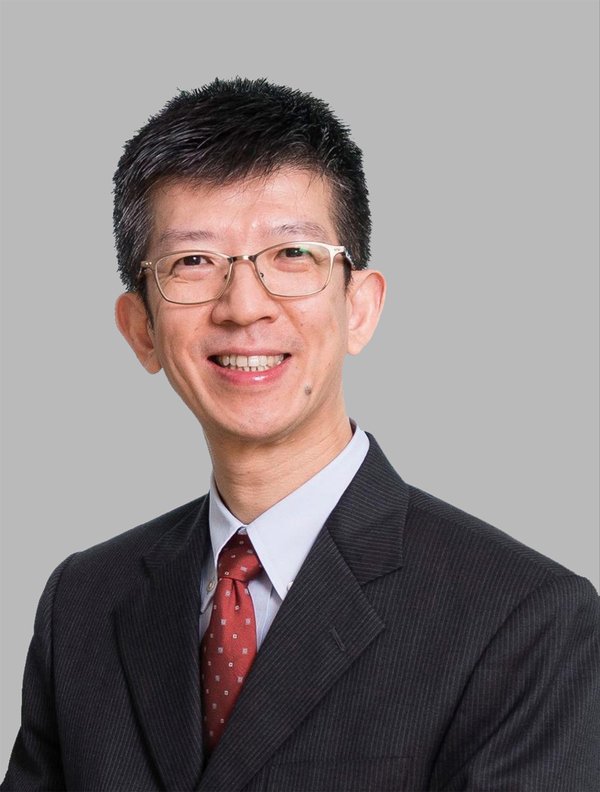
Portrait of Haizhou Li
Haizhou Li
The Chinese University of Hong Kong, Shenzhen
Keynote Talk

Listening the Chinese Way

Abstract

Humans have a remarkable ability to pay their auditory attention only to a sound source of interest, that we call selective auditory attention, in a multi-talker environment or a Cocktail Party. As discovered in neuroscience and psychoacoustics, the auditory attention is achieved by a modulation of top-down and bottom-up attention. However, signal processing approach to target speaker extraction in a multi-talker environment remains a challenge. Human listening is more of an art than a science. The Chinese character for the word 'listening' carries the ancient wisdom about important aspects of what people believe it means to really 'listen' to someone, i.e. hearing, seeing, and understanding. In this talk, we study the deep learning solutions to target speaker extraction that enable selective auditory attention. We review the findings from human audio-visual speech perception to motivate the design of speech perception algorithms. We will also discuss the computational auditory models, technical challenges and the recent advances in the field.

Short Bio

Dr. Haizhou Li is a Presidential Chair Professor and Dean at the School of Artificial Intelligence, CUHKSZ. He is also an adjunct professor at NUS. He earned his B.Sc., M.Sc., and Ph.D. from South China University of Technology. A veteran in speech and language technology since 1988, Dr. Li has held global academic posts and significant research/industry leadership roles, including at Apple-ISS Research Centre, Lernout & Hauspie, and the Institute for Infocomm Research (I2R), Singapore. He co-founded the Baidu-I2R Research Centre. His technical contributions include award-winning products like Apple's Chinese Dictation Kits and major deployments like Baidu Music Search. His research interests are ASR (Automatic Speech Recognition), NLP (Natural Language Processing), and IR (Information Retrieval). He has held numerous prestigious service positions, including Editor-in-Chief of IEEE/ACM Transactions on Audio, Speech and Language Processing, and President of International Speech Communication Association (ISCA) and Asia Pacific Signal and Information Processing Association (APSIPA). He has chaired major conferences like ACL (Association for Computational Linguistics) 2012, INTERSPEECH 2014, and ICASSP (International Conference on Acoustics, Speech, and Signal Processing) 2022. Dr. Li is an IEEE Fellow, an ISCA Fellow, a Member of Academy of Engineering Singapore, and a recipient of Singapore's President's Technology Award (2013).


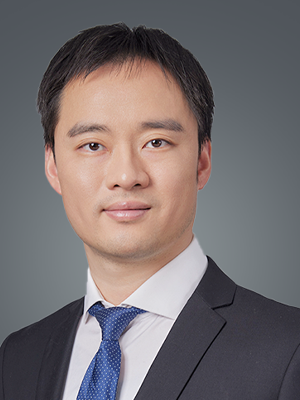
Portrait of Junchi Yan
Junchi Yan
Shanghai Jiao Tong University
Keynote Talk

Exploring the Frontier of Scaling Laws for LLMs

Abstract

This talk shows our recent progress on improved LLM architectures, namely JTok and xHC that push the frontier of scaling laws. Both stem from an insight: model capacity can be substantially boosted with marginal compute overhead, beyond conventional width-depth scaling. JTok augments the token dimension: each token carries a learnable per-layer memory vector injected via lookup-and-light-modulation side branches, leaving the backbone intact. Evaluated at 61B total parameters (17B base + 44B memory parameters) with 570B training tokens, it achieves ~35% training-FLOPs savings for equal performance, at merely 6.8% throughput loss. On the other hand, xHC advances along the residual-flow dimension. To break the long-standing (N=4) limit of Hyper-Connections variants, we tackle two bottlenecks — insufficient write-back information and cubic-scaling residual-mapping cost — via temporal feature enhancement and sparse-residual-flow (dense-read, sparse-write) design, pushing expansion factor to (N=16). On 18B / 28B MoE models, it yields +4.0 / +3.1 average gains over DeepSeek-mHC across twelve downstream benchmarks with only 4.1% / 3.0% extra training FLOPs, delivering ~33% compute savings versus vanilla Transformers under matching-performance scaling-law conditions. Finally, we compare JTok and xHC dimension-wise and discuss their orthogonal composition potential.

Short Bio

Junchi Yan is a tenured professor at the School of Artificial Intelligence, Shanghai Jiao Tong University, where he directs the SJTU-ReThinkLab. His research centers on machine learning, in particular learning-based combinatorial optimization, graph matching, and AI for science, with applications in computer vision and autonomous driving. Prof. Yan is an IAPR Fellow, a recipient of the IEEE CIS Outstanding Early Career Award and the IEEE Computer Society AI's 10 to Watch, and in 2025 was elected the first ICML board member from mainland China. He serves on the editorial boards of IEEE TPAMI and JMLR.